
Fertility Begins to Decline After 30
A woman’s ability to conceive naturally starts to reduce after the age of 30. While many women in their early 30s can still conceive naturally, the chances begin to reduce with each passing year—especially after age 35. This is due to a natural decline in reproductive hormones and egg health. Even with regular periods, ovulation may not be as efficient, making it harder to conceive. That’s why women planning to delay pregnancy are often advised to monitor their fertility early.
Egg Quality and Quantity Decrease with Age
Women have a fixed number of eggs at birth, and both their quantity and quality decline as they age. As age increases, eggs are more likely to have chromosomal abnormalities, which can lead to failed conception or a higher risk of miscarriage. This decline becomes more noticeable after 35 and affects the success rate of both natural pregnancy and fertility treatments like IVF. Monitoring ovarian reserve through medical checkups can help women make informed decisions.
Hormonal Changes Affect Ovulation
As a woman ages, especially after 30, her reproductive hormones—like FSH (follicle-stimulating hormone), estrogen, and progesterone—begin to shift. These changes can lead to irregular ovulation or skipped cycles, making it harder to predict fertile days. Even if periods remain regular, the quality and number of eggs naturally decline, which can reduce the chances of getting pregnant.
Higher Risk of Pregnancy Complications
With increasing age, the risk of pregnancy-related complications also rises. Women over 35 are more likely to face issues like gestational diabetes, high blood pressure, and placental problems. There’s also a higher chance of chromosomal abnormalities such as Down syndrome. Additionally, the risk of miscarriage grows due to lower egg quality, making prenatal care and medical guidance especially important for older mothers.
IVF Success Rates Decline with Age
• Egg quantity and quality reduce with age
At birth, a woman already has all the eggs she will produce throughout her life. As they age, especially after 30, the number of eggs decreases, and after 35, the quality also begins to drop significantly.
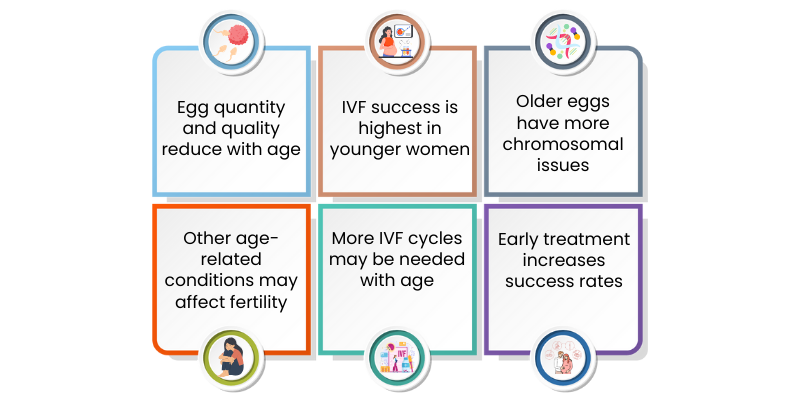
- IVF success is highest in younger women
IVF tends to work better for women under 35, where success rates can be 40% or more per cycle. After 38, the chances begin to decline, and by 40, it can drop to less than 10%. - Older eggs have more chromosomal issues
With age, the risk of chromosomal abnormalities in eggs increases, leading to failed implantation, miscarriages, or genetic issues in the baby. - Other age-related conditions may affect fertility
Conditions like endometriosis, fibroids, and reduced uterine lining health become more common with age, making conception more difficult. - More IVF cycles may be needed with age
Women over 38 may require multiple IVF cycles or may need to consider donor eggs to improve chances of success. - Early treatment increases success rates
Acting sooner rather than later gives women a better chance at pregnancy using their own eggs.
Early Fertility Assessment Can Help
- Helps understand your fertility health
A simple fertility check-up (AMH, AFC, hormone levels) provides a clear picture of your ovarian reserve and reproductive health. - Ideal for women delaying motherhood
Women who are not ready to conceive soon can still plan wisely by knowing their fertility status early. - Fertility preservation is possible
If egg reserve is low or if pregnancy is being delayed, egg freezing can help preserve fertility for the future. - Prevents emotional and time-related stress
Early testing avoids the frustration of trying for years without knowing there’s a problem. - Useful for couples trying naturally
It helps couples decide if they need to wait or consult a fertility expert early for guidance. - Empowers better planning
Being informed about your fertility allows you to make confident, timely decisions about starting a family.
Conclusion
Age has a significant impact on female fertility and the ability to conceive. As women age, the number and quality of eggs decline, leading to decreased fertility and a higher chance of complications. While many women do conceive successfully in their 30s and early 40s, being informed early makes all the difference. If you’re planning to conceive later in life or facing difficulties, consulting a gynecologist or fertility specialist can help you understand your options—whether it’s natural conception, fertility preservation, or assisted reproductive techniques. Taking timely steps ensures better outcomes and empowers you to make confident choices for your reproductive health.